Are your glasses helping your life-or quietly getting in the way?
The right prescription glasses should do more than sharpen your vision; they should fit how you work, drive, read, exercise, travel, and present yourself every day.
From lens materials and coatings to frame shape, durability, comfort, and style, each choice affects how your glasses perform in real life-not just in the exam room.
This guide will help you match your prescription glasses to your lifestyle so you can see clearly, feel comfortable, and choose frames you’ll actually want to wear.
What Your Daily Routine Reveals About the Right Prescription Glasses
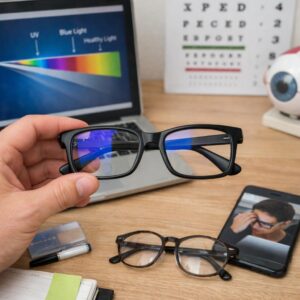
Your daily schedule is one of the best clues for choosing prescription glasses that actually work in real life. If you spend hours on a laptop, your priority may be blue light filtering lenses, anti-reflective coating, or computer glasses designed for intermediate viewing distance. Someone who drives at night, on the other hand, should pay closer attention to glare reduction, lens clarity, and scratch-resistant coatings.
Think through where your eyes work hardest during the day. A teacher moving between a smartboard, papers, and students may benefit from progressive lenses, while a graphic designer using a calibrated monitor may need precise lens measurements and premium anti-glare treatment. Small details matter because the wrong lens upgrade can add cost without improving comfort.
- Desk work: consider computer lenses, blue light protection, and anti-reflective coating.
- Driving: prioritize glare control, polarized prescription sunglasses, and durable lens materials.
- Active days: look for lightweight frames, flexible hinges, and impact-resistant lenses.
A useful step is checking frame fit and lens options with a virtual try-on tool such as Warby Parker before visiting an optician or ordering online eyeglasses. It will not replace a professional eye exam, but it helps you compare frame shape, comfort, and style before discussing prescription lens cost, vision insurance coverage, or add-on benefits. The best glasses are not just the ones that look good; they match the way you actually live.
How to Match Frame Shape, Lens Type, and Coatings to Your Lifestyle Needs
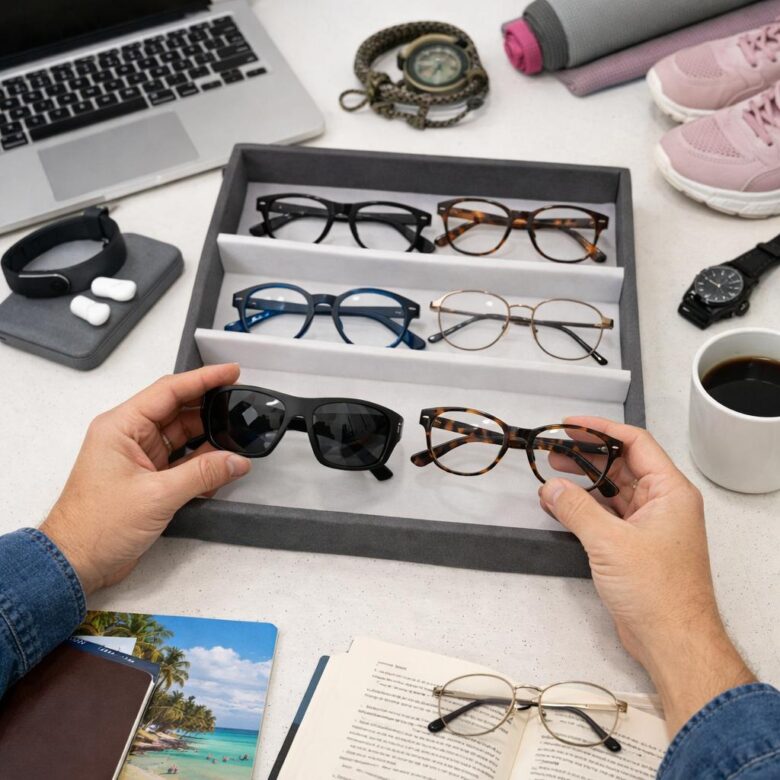
The best prescription glasses are not just about your vision prescription; they should fit how you work, drive, read, exercise, and use digital devices. Start with frame shape: round or oval frames can soften angular faces, while rectangular frames often suit rounder faces and give a sharper professional look for office settings or client meetings.
Lens type matters even more if your day changes between screens, roads, and outdoor light. For example, someone who works eight hours on a laptop and drives home at night may benefit from single-vision or progressive lenses with anti-reflective coating, while a delivery driver might prioritize polarized prescription sunglasses for glare reduction and safer daytime driving.
- Office and screen use: consider blue light filtering lenses, anti-glare coating, and lightweight frames for all-day comfort.
- Driving and outdoor activity: look at polarized lenses, transition lenses, UV protection, and impact-resistant polycarbonate lenses.
- Active lifestyles: choose flexible frames, secure nose pads, scratch-resistant coating, and durable lens materials.
A practical tip from real fittings: people often choose frames they like visually but ignore weight and bridge fit, which can cause slipping or pressure marks after a few hours. Before buying, use a virtual try-on tool like Warby Parker or compare lens upgrade costs on an online eyewear retailer, then confirm measurements such as lens width, bridge size, and temple length against a pair you already wear comfortably.
Coatings add cost, but they can improve daily comfort and reduce replacement needs. If your glasses are your main pair, anti-reflective, UV protection, and scratch-resistant coatings are usually worth considering before cosmetic upgrades.
Common Prescription Glasses Mistakes That Affect Comfort, Vision, and Long-Term Wear
One of the biggest mistakes is choosing frames based only on style. A frame that looks good online may sit too low, pinch the nose, or place the lenses at the wrong angle, especially with progressive lenses or high-prescription glasses. If you work long hours on a laptop, poor frame fit can turn into daily eye strain, headaches, and constant adjustments.
Another common issue is skipping lens upgrades that actually match your lifestyle. Anti-reflective coating is worth considering if you drive at night, attend video meetings, or work under bright office lighting. For example, someone using dual monitors all day may benefit more from premium prescription lenses with anti-glare treatment than from simply buying the cheapest frames available.
- Ignoring pupillary distance (PD): An incorrect PD can make even accurate prescription glasses feel “off.” Use an optician’s measurement or a reliable tool like Warby Parker’s Virtual Vision Test where available.
- Buying the wrong lens type: Single-vision, bifocal, progressive, and computer glasses serve different needs, so match the lens to your real daily routine.
- Overlooking insurance and cost: Check your vision insurance benefits, HSA/FSA eligibility, and lens replacement cost before ordering.
A practical rule: bring your daily habits into the decision. If you drive, read, use screens, exercise, or switch between indoor and outdoor spaces often, tell your optometrist or eyewear retailer before buying. The right prescription glasses should feel easy to wear, not like something you have to tolerate.
Summary of Recommendations
Choosing the right prescription glasses is ultimately about matching clear vision with the way you actually live. Prioritize comfort, lens function, and frame durability over trends alone, especially if you wear your glasses all day, work on screens, drive often, or stay active. Before buying, consider your daily routine, prescription needs, face shape, and long-term comfort. When in doubt, ask your eye care professional which lens features and frame materials best support your habits. The best pair should feel effortless, look natural, and help you move through every part of your day with confidence.