The wrong lens type can make even the right prescription feel uncomfortable.
Single vision, progressive, bifocal, trifocal, reading, computer, and specialty lenses are not interchangeable-they solve different vision problems and fit different daily routines.
Choosing well means understanding how each lens works, where it performs best, and what trade-offs to expect in clarity, comfort, adaptation time, and cost.
This guide breaks down the main eyeglass lens types so you can discuss your options confidently and choose lenses that match how you actually use your eyes.
What Are the Main Eyeglass Lens Types? Single Vision, Bifocal, Progressive, and Specialty Options
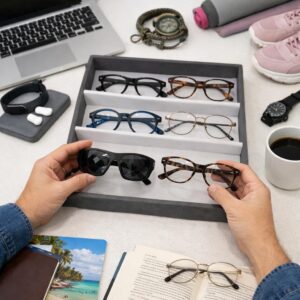
The main eyeglass lens types are single vision, bifocal, progressive, and specialty lenses. The right choice depends on your prescription, daily screen time, driving habits, age, and budget for prescription glasses or vision insurance coverage.
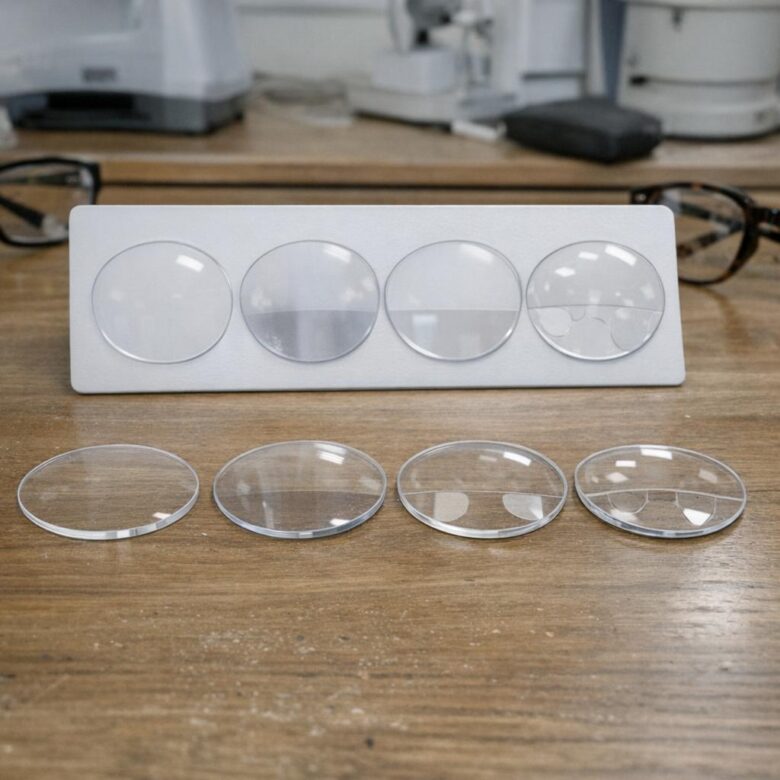
Single vision lenses correct one field of vision, usually distance, reading, or computer use. For example, someone who drives often but reads fine may only need distance lenses with anti-reflective coating to reduce glare at night.
Bifocal lenses have two prescription zones: one for distance and one for near vision. They are practical for people with presbyopia who want a lower-cost alternative to progressive lenses, although the visible line can take some getting used to.
Progressive lenses offer distance, intermediate, and near correction without a visible line. They cost more, but they are often worth it for people who move between a laptop, phone, and meetings throughout the day.
- Computer lenses: Designed for screen distance and may reduce eye strain during long workdays.
- Photochromic lenses: Darken outdoors, which can reduce the need for separate prescription sunglasses.
- High-index lenses: Thinner and lighter, useful for stronger prescriptions.
A practical tip: when comparing options on platforms like Zenni Optical or at a local optometrist’s office, check the total lens cost after coatings, blue light filters, and upgrades. The cheapest frames are not always the best value if the lenses lack the features you actually use every day.
How to Choose the Right Lens Type for Your Prescription, Age, and Daily Tasks
The right eyeglass lens type depends on three things: your prescription strength, your age, and how you actually use your eyes during the day. A mild distance prescription may only need single vision lenses, while a stronger prescription often benefits from high-index lenses to reduce thickness, weight, and lens distortion.
Age matters because focusing ability changes over time. If you are over 40 and find yourself holding your phone farther away, progressive lenses or bifocals may be more practical than switching between separate reading glasses and distance glasses.
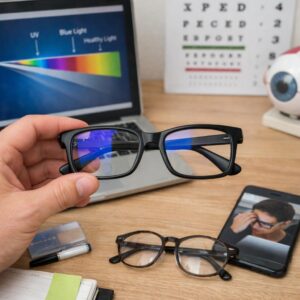
- Desk work: Consider computer glasses, blue light filtering lenses, and anti-reflective coating for long screen sessions.
- Driving: Prioritize clear distance vision, glare reduction, and polarized prescription sunglasses if you drive often.
- Active lifestyle: Look for impact-resistant polycarbonate or Trivex lenses, especially for sports or kids’ glasses.
A real-world example: someone who works on a laptop all day, drives at night, and reads menus up close may feel frustrated with basic single vision lenses. In that case, office progressives or everyday progressive lenses with premium anti-glare coating can be worth the higher lens cost.
Before ordering prescription eyeglasses online, compare your needs with your optometrist’s recommendation and check measurements like pupillary distance. Tools such as Warby Parker Virtual Try-On can help with frame style, but lens selection should still be based on your prescription, comfort, and daily visual demands.
Common Eyeglass Lens Mistakes to Avoid: Fit, Add Power, Progressive Corridor, and Adaptation Issues
One of the most expensive eyeglass lens mistakes is choosing frames before confirming they work with your prescription. High-index lenses, progressive lenses, and strong astigmatism prescriptions need accurate pupillary distance, optical center height, pantoscopic tilt, and frame wrap measurements. A frame that sits too low or slides down can make even premium lenses feel “wrong.”
Progressive lens wearers should pay close attention to add power and corridor length. If the reading add is too strong, near vision may feel clear but distance-to-computer transitions can become uncomfortable. For example, someone who works on dual monitors may do better with computer glasses or occupational lenses instead of forcing everyday progressives to handle every task.
- Fit issue: slipping frames can shift the viewing zone and cause blur or headaches.
- Add power issue: too much reading power can narrow useful intermediate vision.
- Corridor issue: short corridors may suit small frames but can feel cramped for new progressive wearers.
Ask your optician whether they use digital measuring tools such as ZEISS i.Terminal or Essilor measuring systems, especially for premium progressive lenses. These devices help capture fitting height, vertex distance, and frame position more precisely than a quick ruler measurement. It is also smart to ask about remake policies, lens warranty, and the cost difference between standard and personalized lens designs.
Finally, allow a realistic adaptation period, but do not ignore persistent problems. If stairs look distorted, your neck posture changes, or reading feels limited after consistent wear, return for a fitting check before assuming progressives are not for you.
Wrapping Up: Eyeglass Lens Types: Single Vision, Progressive, Bifocal, and More Insights
The best lens type is the one that matches how you actually use your eyes each day. Choose based on your prescription, work habits, screen time, driving needs, and comfort expectations-not just on price or appearance.
If your needs are simple, single vision lenses may be enough. If you switch often between near and far tasks, progressives or bifocals may offer better convenience. When in doubt, discuss your daily routine with your eye care professional so your lenses support clearer vision, easier adaptation, and long-term wearing comfort.