Vision benefits are easiest to use when you verify them before the appointment or purchase. The provider can estimate your cost, but your insurer’s plan document controls eligibility, allowances, network rules, and claim deadlines.
Before scheduling care, find out whether your benefits treat the eye exam, eyeglass frames, lenses, lens upgrades, contact lenses, and contact lens fitting as separate charges. A service listed as “covered” may still involve a copay, allowance limit, frequency restriction, or out-of-network reimbursement cap.
Start With the Dates, Dollar Limits, and Network Rules
Do not assume all benefits reset on January 1. A plan might provide an exam once per calendar year, frames every 24 months, or contacts once per benefit year. Some plans measure eligibility from the date you last used the benefit.
Collect these details before you shop:
- Routine exam: Your next eligible date and expected copay.
- Frames: The allowance, eligible date, and any discount on the amount above the allowance.
- Lenses: Copays for your prescription type and the price rules for upgrades.
- Contacts: The allowance and whether using it replaces the frame or eyeglass-lens benefit.
- Contact lens fitting: Whether it is covered, discounted, or charged separately.
- Network: Whether the doctor, optical department, and retailer are each in network.
- Out-of-network claims: The reimbursement limit, required documents, and filing deadline.
When calling the insurer, ask for the exact eligible dates rather than asking only whether you have “annual” benefits. Save the online benefit summary or note the call reference number in case the claim is later processed differently.
Understand the Charges Before the Visit
An appointment and eyewear order can produce several separate charges. Asking about each one makes the estimate more useful.
| Possible Charge | What It Generally Relates To | Question to Ask |
|---|---|---|
| Routine eye exam | Vision assessment and evaluation of eye health | What is my copay, and when am I eligible? |
| Refraction | Measurement used to determine an eyeglass prescription | Is refraction included in the exam benefit or billed separately? |
| Contact lens fitting | Measurements, lens selection, fit assessment, and possibly follow-up | What does the fitting fee include, and what will insurance pay? |
| Frames | The frame itself, usually subject to an allowance | How is the amount above the allowance calculated? |
| Prescription lenses | Single-vision, bifocal, progressive, or other prescribed lenses | What is the cost for the basic covered lens option? |
| Lens features | Options such as anti-reflective coating, high-index material, photochromic lenses, or other enhancements | Is each feature covered, discounted, or fully out of pocket? |
Using the Exam Benefit
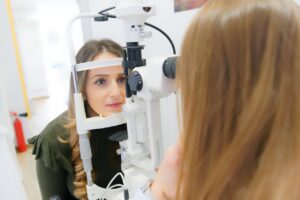
Confirm that the eye doctor is in network before making the appointment. An office may accept your insurer for some services but participate in a different network for routine vision benefits, so verify the specific plan—not only the insurance company’s name.
Tell the scheduler why you need the visit. A routine prescription check may be handled through vision benefits, while eye pain, injury, infection, sudden vision changes, or monitoring of an eye condition may fall under health insurance. The final billing route can depend on the services provided and the reason or diagnosis documented during the visit, so an office may not be able to guarantee the outcome in advance.
Useful questions for the office include:
- Do you participate in my exact vision plan?
- Will you verify my eligibility before the appointment?
- Is refraction included in the quoted exam cost?
- Are contact lens fitting and follow-up visits separate?
- If the visit becomes medical rather than routine, do you also accept my health insurance?
- Can you provide an itemized estimate before optional services or products are added?
Using Vision Benefits for Glasses
Glasses benefits commonly combine a frame allowance with separate pricing for prescription lenses. That means the frame can be within the plan allowance while the lenses still create a significant balance—or the basic lenses can be covered while a higher-priced frame creates an overage.
Ask for two versions of the quote
First, request the price for the frame and the basic lens option available under your plan. Then ask for a second total that includes the features you are considering. The comparison should show:
- The frame price and amount applied from the frame allowance
- Any frame overage you must pay
- The copay or cost for the prescribed lens type
- Each coating, material, or lens feature listed separately
- Plan discounts and other eligible discounts
- Your estimated final balance
Ask whether an upgrade is recommended because of your prescription or intended use, or whether it is optional. Insurance coverage does not determine whether a feature is appropriate for you, and an uncovered feature is not automatically unnecessary. Your eye care professional or optician can explain the practical differences.
Check the frame and lens schedules separately
Your frame benefit may renew on a different schedule from your exam or lens benefit. If frames are available every 24 months, a new calendar year may not make you eligible. Confirm the exact date before the order is submitted.
Keep the prescription, itemized receipt, order details, and any warranty or remake information. These records can help with claim corrections, adjustments, returns, or reimbursement from an eligible spending account when permitted. The same expense should not be reimbursed twice.
Using Vision Benefits for Contact Lenses
A contact lens prescription is different from an eyeglass prescription. Contacts must be selected and fitted for the eye, and the prescription typically includes lens-specific information in addition to corrective power.
Before choosing contacts, settle two separate questions:
- What does the fitting cost? Ask whether the fee includes trial lenses, training, and follow-up visits, and whether the plan covers all or part of it.
- What happens to the glasses benefit? Some plans require members to use the eyewear allowance for either contacts or glasses during the same benefit period.
A contact allowance may cover only part of the supply you want. Ask whether it is a fixed dollar allowance, whether the retailer can apply it directly, and what you will owe after it is used.
Coverage for medically necessary contact lenses may follow different criteria from routine elective contact coverage. If your eye care professional recommends contacts for a medical reason, ask the insurer what clinical documentation, prior approval, or network rules apply. A recommendation alone does not guarantee coverage.
Compare the Final Cost, Not Just the Allowance
The largest allowance does not always produce the lowest total. Compare the complete purchase through each available route:
In-network with benefits
- Exam or fitting copays
- Frame amount above the allowance
- Lens copays and upgrade charges
- Contact lens cost above the allowance
- Any plan-negotiated discounts
Out of network with reimbursement
- Amount paid upfront
- Expected reimbursement under the plan’s out-of-network schedule
- Claim paperwork and filing deadline
- Any services or products excluded from reimbursement
Cash or promotional pricing
- Complete price for the exam or eyewear
- Whether the promotion can be combined with insurance
- Shipping, adjustments, return terms, and remake coverage
- Whether saving the benefit for a later eligible purchase has value
Ask for the totals in writing when possible. A verbal quote is useful for planning, but the insurer processes the claim according to the plan terms and the services submitted.
Using Benefits at an Online Eyewear Store
Some online retailers can verify and apply benefits during checkout. Others are out of network and require you to pay in full before requesting reimbursement.
Before ordering online:
- Confirm network participation with the insurer, not only the retailer.
- Check whether the benefit is applied immediately or reimbursed later.
- Make sure the prescription is current and complete for the product being ordered.
- Compare the insurance total with the retailer’s cash or promotional total.
- Review policies for returns, prescription changes, remakes, and frame adjustments.
- Ask how a return affects used benefits and when eligibility would be restored.
- Save the itemized receipt, prescription, claim form, and proof of payment.
If you split your care—for example, having an exam at one office and buying glasses elsewhere—confirm that the exam did not consume an allowance you intended to use for eyewear. Exam and materials benefits are often separate, but plan designs differ.
If the Estimate or Claim Does Not Look Right
A difference between an estimate and the processed claim does not always mean the charge is incorrect. Eligibility may have changed, the provider may have been treated as out of network, or an item may have been classified as an upgrade rather than a covered benefit.
- Read the insurer’s explanation. Look for the denial or adjustment reason, service date, provider name, and benefit category.
- Compare it with your records. Check the written estimate, receipt, eligibility information, and plan summary.
- Contact the appropriate party. Ask the provider about submitted information or billing errors. Ask the insurer about eligibility, network status, and benefit interpretation.
- Request correction or review when appropriate. Follow the plan’s instructions for a corrected claim, reconsideration, or appeal, and observe its deadline.
- Keep notes. Record dates, representative names or reference numbers, and requested documents.
If coverage is provided through work, the employer’s benefits department may help locate the official plan materials or explain enrollment and dependent-coverage issues. It generally cannot change how the insurer processes an individual claim.
When the Issue Is Medical Rather Than Routine
Vision benefits are generally intended for routine exams and corrective eyewear. Health insurance may be the appropriate billing route when care involves an injury, infection, eye disease, diabetes-related eye evaluation, cataracts, glaucoma, or symptoms requiring medical assessment.
Do not minimize symptoms to make an appointment fit a routine vision benefit. Explain the reason for the visit accurately so the office can direct you to appropriate care.
A Final Check Before You Approve the Charge
Before paying for an exam, glasses, or contacts, confirm:
- The provider is in network for the specific service.
- You are eligible on the planned service or order date.
- You know whether glasses and contacts share one allowance.
- The estimate separates basic covered options from upgrades.
- Contact lens fitting charges are listed separately.
- You have compared the insured total with any cash option.
- You understand the claim process if paying upfront.
- You have the receipt, prescription, and plan information needed for your records.
Frequently Asked Questions
Can I use vision insurance for both glasses and contacts?
It depends on the plan. Some provide separate benefits, while others require you to choose a glasses allowance or a contact lens allowance during the same coverage period. Confirm this before ordering either product.
Can I have an exam at one office and buy eyewear somewhere else?
Often, yes. However, network participation and claim procedures may differ for the exam and the eyewear seller. Verify both providers separately and make sure you understand which benefits remain after the exam.
Why do glasses still cost money when the plan says they are covered?
“Covered” may mean the plan provides an allowance, fixed copay, or discounted price rather than paying the entire bill. A frame above the allowance, progressive or high-index lenses, coatings, and other features can increase the balance.
Is a contact lens fitting included in a routine eye exam?
Not necessarily. A contact lens fitting involves lens-specific measurements and evaluation and may carry a separate fee. Ask what the fee includes and how your plan treats it before the appointment.
Official Coverage Resources
These federal resources provide additional context about vision coverage in the United States. Your own plan documents remain the controlling source for your benefits.
- HealthCare.gov — Vision coverage glossary
- Medicare.gov — Routine eye exams coverage
- Medicare.gov — Eyeglasses and contact lenses coverage
- Medicare.gov — Eye exams for diabetes
Editorial scope: This article provides general educational information. It does not replace official plan documents, insurer decisions, tax guidance, or advice from a licensed eye care professional.

Eyestine Vision Editorial Team publishes consumer-focused guides about eye care, eyewear, eye-exam planning, and vision insurance. Articles are educational and are not a substitute for diagnosis or treatment by a licensed eye-care professional. Unless an article explicitly names a qualified medical reviewer, readers should not assume that it received independent clinical review.