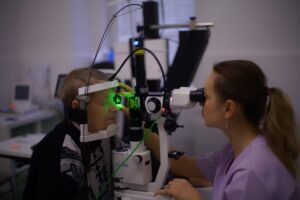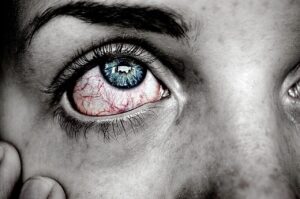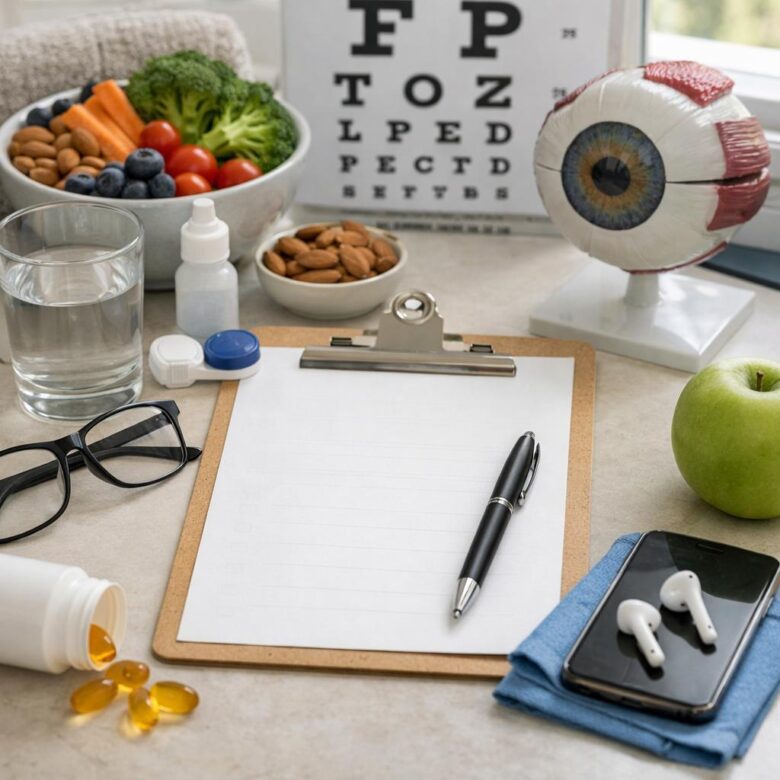
Daily eye care does not need to be complicated. A useful routine focuses on a few repeatable actions: keep hands and eyewear clean, give your eyes breaks from close work, protect them from ultraviolet radiation and injury, and pay attention when comfort or vision changes.
These habits can reduce avoidable strain and support long-term eye health, but they cannot correct a prescription or prevent every eye condition. Persistent, painful, or sudden symptoms need professional attention rather than a more elaborate home routine.
Your Daily Eye Health Checklist
Use this checklist as a quick review rather than a rigid schedule. Contact lens wearers and people with diabetes, high blood pressure, previous eye disease, or a family history of glaucoma may need additional guidance from their care team.
At the start of the day
- Notice your baseline: Check whether your vision seems normal for you and whether either eye feels painful, unusually blurry, irritated, or sensitive to light.
- Clean your glasses correctly: Use a suitable lens cleaner and a clean microfiber cloth. Dirty or scratched lenses can make you squint and may worsen glare.
- Handle contact lenses with clean, dry hands: Follow the replacement and cleaning schedule provided for your lenses. Do not use tap water or saliva to clean or wet them.
- Prepare for outdoor exposure: Keep UV-protective sunglasses where you will remember them, such as near your keys or in your bag.
During work, school, or close-up tasks
- Look away regularly: Use the 20-20-20 approach as a reminder—about every 20 minutes, look roughly 20 feet away for 20 seconds.
- Blink fully: Concentrated screen use can reduce blinking, leaving the eye surface feeling dry or irritated.
- Match the screen to the room: Avoid a bright screen in a dark room, reduce distracting reflections, and enlarge text instead of leaning forward or squinting.
- Change focus and position: Alternate close work with tasks that let you look farther away, and take movement breaks when possible.
- Keep vents out of your face: Direct airflow from fans, heaters, or air conditioners can contribute to eye-surface discomfort.
When you go outside or do hands-on work
- Wear sunglasses with verified UV protection: Look for labeling that states 99% to 100% UVA and UVB protection. Dark tint alone does not confirm UV protection.
- Use task-appropriate protective eyewear: Regular prescription glasses may not provide enough protection for repairs, yard work, dusty jobs, sports, chemicals, or tasks that create flying particles.
- Do not rub irritated eyes: Rubbing can transfer debris and germs from your hands and may further irritate the eye surface.
Before bed
- Remove contact lenses as directed: Do not sleep in lenses unless that specific lens type has been prescribed for overnight wear.
- Clean and store reusable lenses properly: Use fresh contact lens solution and follow the instructions for your lenses and case. Never substitute water.
- Remove eye makeup gently: Do not share eye cosmetics, and replace products that are contaminated, expired, or associated with irritation.
- Review recurring symptoms: Note when blur, headaches, dryness, redness, glare, or eye fatigue appeared and what you were doing at the time.
Make Screen Breaks More Effective
The 20-20-20 rule is a reminder to interrupt prolonged close focus; it is not a treatment for eye disease. Your overall setup also matters.
- If you keep moving closer to the screen: Increase text size and check whether your glasses or contacts provide clear vision at that distance.
- If glare is the problem: Reposition the screen or nearby light sources before simply lowering brightness.
- If your eyes burn late in the day: Pay attention to blinking, direct airflow, contact lens wear time, and the length of uninterrupted work sessions.
- If headaches repeatedly follow reading or computer work: Review your lighting and posture, but schedule an eye exam if the pattern continues.
Do not assume every screen-related symptom is caused by the screen. An outdated prescription, contact lens irritation, dry eye, or another condition can produce similar complaints.
Contact Lens Habits That Deserve Extra Attention
Contact lenses sit directly on the eye, so shortcuts that seem minor can increase the risk of irritation or infection. Follow the schedule and care instructions for your specific lens type rather than copying another wearer’s routine.
- Wash and thoroughly dry your hands before touching lenses.
- Use only recommended contact lens solution; do not rinse or store lenses in water.
- Replace lenses and the storage case according to professional and product instructions.
- Avoid showering or swimming in contact lenses unless you have been given specific guidance for your situation.
- Do not “top off” old solution in the case with a small amount of fresh solution.
- Check that any eye drops you use are appropriate for contact lens wear.
If a lens becomes uncomfortable, remove it with clean hands. Do not keep wearing or repeatedly reinserting a lens that causes pain, persistent redness, discharge, light sensitivity, or reduced vision. Contact an eye care professional promptly for guidance.
Eye Protection Beyond Sunglasses
Different settings call for different forms of protection. Before starting an activity, consider what could reach the eye and whether ordinary eyewear is sufficient.
At home
Wear protective eyewear when using power tools, trimming vegetation, drilling, sanding, handling harsh cleaning products, or doing work that creates dust and fragments. Quick household jobs can still cause significant eye injuries.
While driving
Keep glasses, sunglasses, mirrors, and the windshield clean. If road signs are becoming difficult to read, glare has increased, or night driving feels less clear than before, arrange a vision evaluation instead of relying only on brighter lights or a different lens tint.
Outdoors
UV exposure still occurs on cloudy days. Sunglasses with confirmed UVA and UVB protection are more important than lens darkness alone. A hat with a brim can provide additional shade but does not replace protective lenses.
Support Eye Health Through General Health
The eyes are affected by overall health. A balanced eating pattern, regular physical activity, adequate sleep, and appropriate management of medical conditions can all be part of responsible vision care.
- Include a variety of fruits, vegetables, and dark leafy greens in regular meals.
- Choose fish and other nutrient-rich foods as part of a balanced diet when appropriate for you.
- Stay reasonably hydrated, while recognizing that drinking extra water is not a cure for persistent dry eye.
- Avoid smoking and seek support if you need help quitting.
- Follow your clinician’s plan for diabetes, high blood pressure, and other conditions that may affect eye health.
- Discuss supplements with a health professional rather than assuming an “eye health” product is necessary or suitable.
What to Check Weekly and Put on Your Calendar
Some useful habits do not need to happen every day. A brief weekly or monthly review can catch problems that are easy to overlook.
Check regularly
- Inspect glasses for loose screws, bent frames, deep scratches, or damaged coatings.
- Check expiration dates and storage instructions for eye drops, contact lens solution, and eye makeup.
- Replace or clean contact lens supplies according to their instructions.
- Restock protective eyewear and keep it near the tools or equipment where it will be used.
- Review whether the same symptoms appear during particular tasks, at certain times, or in one eye.
Plan ahead
- Schedule eye examinations based on your age, symptoms, health history, family history, and your eye care professional’s recommendation.
- Do not wait for a routine appointment if your vision changes suddenly or you develop concerning symptoms.
- Bring your current glasses, contact lens information, medication list, and symptom notes to an appointment.
How to Respond When Something Changes
A checklist is useful only if it helps you act appropriately. The examples below are not diagnoses; they are general guidance for deciding when home adjustments may be reasonable and when professional care is more appropriate.
| What you notice | Reasonable response |
|---|---|
| Mild tiredness after prolonged close work that improves with rest | Take visual and movement breaks, improve lighting, reduce glare, and monitor whether the problem keeps returning. |
| Recurring blur, squinting, headaches after reading, or increasing difficulty with night driving | Schedule an eye exam rather than guessing at a new prescription or relying on someone else’s glasses. |
| Persistent dryness, itching, redness, or contact lens discomfort | Stop aggravating activities, remove contact lenses if worn, and ask an eye care professional about the safest next step. |
| Redness with discharge, pain, light sensitivity, or reduced vision | Contact a health professional promptly. Avoid sharing towels, cosmetics, drops, or contact lens supplies. |
| Sudden vision loss, severe pain, injury, new flashes, many new floaters, or a curtain-like shadow | Seek urgent medical evaluation rather than waiting to see whether it improves. |
Questions to Bring to an Eye Appointment
Specific questions can make an exam more useful, particularly when symptoms come and go.
- Could my current glasses or contact lens prescription be contributing to these symptoms?
- Are my contact lens type, wear time, and cleaning routine appropriate?
- Do my health conditions or medications affect my eyes or exam schedule?
- Which symptoms should prompt me to call sooner than my next routine visit?
- What type of protective eyewear is appropriate for my work, sports, or home projects?
- Are the eye drops or supplements I use suitable for me?
Focused Questions About Daily Eye Care
Can daily habits improve my eyesight?
Healthy habits may improve comfort and reduce avoidable strain, but they do not usually reverse nearsightedness, farsightedness, astigmatism, cataracts, glaucoma, or retinal disease. Changes in clarity should be evaluated rather than treated only with lifestyle adjustments.
Does the 20-20-20 rule prevent eye disease?
No. It is a practical reminder to interrupt prolonged close focus and may help with screen-related fatigue. It does not replace UV protection, protective eyewear, contact lens hygiene, prescribed vision correction, or eye examinations.
Are sunglasses useful on cloudy days?
Yes. Ultraviolet radiation can still be present when the sky is cloudy. Choose sunglasses labeled to block 99% to 100% of UVA and UVB radiation rather than judging protection by how dark the lenses appear.
When is blurry vision an urgent concern?
Seek urgent care when blur or vision loss begins suddenly, particularly if it affects one eye or occurs with pain, injury, flashes, new floaters, a shadow in the visual field, weakness, dizziness, confusion, or a severe headache. Gradual or recurring blur also deserves an eye exam, even when it is not an emergency.
Trusted Eye Health Resources
- Centers for Disease Control and Prevention — Taking Care of Your Eyes
- National Eye Institute — Keep Your Eyes Healthy
- MedlinePlus — Eye Care
Eyestine Vision Editorial Team publishes consumer-focused guides about eye care, eyewear, eye-exam planning, and vision insurance. Articles are educational and are not a substitute for diagnosis or treatment by a licensed eye-care professional. Unless an article explicitly names a qualified medical reviewer, readers should not assume that it received independent clinical review.