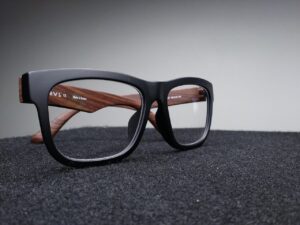
Blue light glasses are sold as a solution for screen-related eye strain, sleep problems, and even long-term eye protection. Those claims are not equally well supported.
For most people, digital eye discomfort is more closely associated with prolonged near focus, reduced blinking, dry eyes, glare, poor lighting, small text, or an outdated prescription than with blue light itself. Blue-light-filtering lenses may still be a reasonable comfort preference, but they should not be treated as necessary protection from ordinary screen use.
Bottom line: Choose these glasses only after identifying the problem you want them to solve. Lens clarity, glare control, prescription accuracy, frame fit, and a useful return policy may matter more than the “blue light” label.
Start With the Reason You Want Them
Before comparing coatings or tints, decide which of these situations best describes your concern:
- Your screen looks harsh or reflective: An anti-reflective coating, better room lighting, or repositioning the monitor may help more directly.
- Text becomes blurry at your usual working distance: You may need an updated prescription or lenses designed for computer distance.
- Your eyes feel dry or gritty: Reduced blinking, contact lens wear, airflow, or dry eye may be contributing. Blue light filtering does not address those causes.
- You want less bright light in the evening: A warmer lens tint may reduce some blue light, but screen brightness, timing, and bedtime habits also matter.
- You are concerned about permanent screen damage: Current evidence does not show that blue light from normal digital-device use causes eye disease in the way some advertising suggests.
If several of these apply, one pair of glasses may not solve everything. For example, a person with blurred monitor vision and glare may benefit more from an accurate computer-distance prescription with an anti-reflective coating than from nonprescription blue light glasses.
What the Lenses Actually Do
Blue light glasses filter or absorb part of the short-wavelength visible light commonly described as blue or blue-violet light. The amount and range filtered vary among products.
Some lenses are nearly clear and use a subtle filter or coating. Others are visibly yellow, amber, or orange. In general, stronger tints are more likely to change the appearance of whites, skin tones, photos, and other colors. That can be distracting during design, editing, shopping, or any task where color accuracy matters.
“Blue light blocking” is not a single lens standard. Two products using the same phrase may filter different portions of the visible spectrum. A percentage alone may also be difficult to interpret unless the seller explains the wavelength range and how the lens was evaluated.
| Option | What It May Offer | What to Consider |
|---|---|---|
| Clear blue-light-filtering lens | Minimal visible tint for work, school, and video calls | The filtering effect may be modest, and some coatings create noticeable colored reflections |
| Light yellow lens | A warmer appearance that some users find less harsh | Whites and other colors may look different |
| Amber or orange lens | Stronger reduction of selected blue wavelengths, often intended for evening use | Significant color distortion can make it impractical for daytime or color-sensitive work |
| Prescription computer lens | Vision correction tailored to an intermediate working distance | Requires an accurate prescription and working-distance measurements; blue filtering is an optional separate feature |
| Anti-reflective coating | Reduced lens reflections and glare | It is not the same as blue light filtering, although a lens may include both |
What the Evidence Supports—and What It Does Not
Blue-light-filtering lenses may feel more comfortable to some wearers, particularly when the lens also reduces glare or brightness. Personal comfort, however, is different from a proven medical benefit.
A published review of clinical trials found that blue-light-filtering spectacle lenses may not reduce short-term computer-related eye strain compared with lenses that do not filter blue light. Evidence about sleep effects was also uncertain. Study designs, follow-up periods, lenses, and outcomes varied, so shoppers should be cautious about guaranteed claims.
These glasses should not be represented as proven protection against retinal damage or eye disease from ordinary screen use. They also cannot correct blurry vision unless they contain the appropriate prescription.
Be skeptical of claims such as:
- “Prevents all digital eye strain”
- “Protects your eyes from screen damage”
- “Guarantees better sleep”
- “The darkest tint is always best”
- “Eliminates headaches caused by devices”
Headaches, eye discomfort, and blurred vision have many possible causes. A lens feature should not be used to diagnose the reason for those symptoms.
How to Compare Products Without Getting Lost in Marketing
A useful product description should tell you more than the words “blue light protection.” When comparing a retail listing or an optical-office quote, look for answers to the following questions:
Lens information
- Is the filtering built into the lens material or applied as a surface coating?
- Is the lens clear, lightly tinted, yellow, amber, or orange?
- Does the seller identify the wavelength range associated with its filtering claim?
- Will the lens create a blue, purple, or green reflection visible during video calls?
- Is an anti-reflective coating included, optional, or unavailable?
Vision and task requirements
- Is the pair nonprescription, prescription, reading, or computer-distance eyewear?
- At what distance do you normally view your main screen?
- Do you move frequently between a monitor, printed material, and people across the room?
- Do you perform color-sensitive work?
- Will the glasses be worn over contact lenses or instead of regular prescription glasses?
Fit and purchase terms
- Can the glasses be returned after you have viewed screens through them?
- Are prescription lenses covered by the same return or remake terms?
- Does the frame stay in place without pinching the nose or temples?
- Is the frame comfortable with headphones or a headset?
- What does the warranty cover: the frame, lens coating, or both?
A higher price does not automatically establish a stronger blue light benefit. It may reflect frame materials, prescription customization, lens clarity, coating quality, or warranty terms. Compare those features separately rather than assuming that cost proves effectiveness.
Match the Lens to the Situation
For daytime office or school use
Clear or lightly tinted lenses are generally easier to use around other people and during video calls. If glare is the main complaint, prioritize a good anti-reflective coating and a screen setup that avoids bright windows or overhead-light reflections.
For design, photography, or other color-sensitive work
Ask to view a white page, neutral gray, skin tones, and familiar images through the lenses. A subtle color shift that seems acceptable in a product photo may become distracting during a full workday. A clear lens without strong filtering may be the more practical choice.
For evening screen use
Yellow, amber, or orange lenses reduce more selected blue wavelengths than many clear products, but they also alter color more noticeably. They may be acceptable when color accuracy is unimportant. Sleep benefits are not guaranteed, and glasses should be considered alongside lower screen brightness, night settings, reduced late-night device use, and a consistent bedtime routine.
For blurred vision at the monitor
Do not assume the blur is a blue light problem. Regular distance glasses, reading glasses, and computer glasses are designed for different viewing ranges. An optometrist or ophthalmologist can assess your prescription and discuss whether a computer-specific correction makes sense for your working distance.
A Practical At-Home Trial
If the retailer permits returns, evaluate the glasses during your normal routine rather than judging them only by appearance.
- Use your usual workstation. Test the glasses with the monitor, room lighting, headset, and tasks you normally use.
- Check visual clarity. Text should remain sharp at your normal viewing distance. Nonprescription blue light filtering will not compensate for a needed prescription.
- Look for unwanted reflections. Pay attention to colored glare on the lenses, especially during video calls or under overhead lights.
- Check color changes. View white backgrounds, photos, and familiar colors. Decide whether the tint is acceptable for your work.
- Assess the frame after extended wear. Sliding, pressure behind the ears, nose discomfort, or conflicts with a headset can make an otherwise acceptable lens impractical.
- Evaluate the correct problem. If the goal was glare reduction, assess glare. If the goal was evening comfort, assess brightness and tint. Do not interpret temporary symptom changes as proof that the glasses treated a medical condition.
When a Screen-Setup Change May Help More
Blue light glasses cannot correct every source of screen discomfort. Before buying another pair or moving to a darker tint, review the basics:
- Keep the main screen at a comfortable distance rather than leaning forward.
- Position it slightly below eye level if that feels natural for your setup.
- Increase text size instead of squinting.
- Reduce reflections from windows and overhead lighting.
- Take regular distance-viewing breaks, such as the commonly used 20-20-20 approach.
- Blink intentionally during concentrated work.
- Make sure your prescription is current and appropriate for the viewing distance.
- Ask an eye care professional before starting eye drops if dryness is frequent or persistent.
These changes address common contributors such as prolonged focus, glare, posture, and reduced blinking. Blue light filtering may be added as a preference, but it should not replace a suitable workstation or accurate vision correction.
When to Schedule an Eye Exam
Consider an eye exam if discomfort is frequent, worsening, or not improving after reasonable changes to your screen setup. An eye care professional can check visual acuity, prescription needs, eye alignment, focusing demands, and signs of dry eye or other conditions.
Professional evaluation is particularly appropriate for recurring blurred or double vision, persistent redness, eye pain, significant light sensitivity, or headaches associated with visual tasks. Blue light glasses should not delay care for ongoing symptoms.
Seek urgent medical care for sudden vision loss, severe eye pain, a new curtain or shadow in your vision, or a sudden increase in flashes or floaters. These are not routine digital eye strain symptoms.
The Buying Takeaway
Blue light glasses are optional eyewear, not required screen protection. Some people may prefer the way a clear filter, warm tint, or anti-reflective coating changes the viewing experience, while others notice little benefit.
For a sensible purchase, identify your primary goal, separate blue filtering from glare control and prescription correction, check how the lens affects color, and confirm the return terms. If vision is blurry or symptoms persist, an eye exam is a more useful next step than buying progressively darker lenses.
Frequently Asked Questions
Can I wear blue light glasses all day?
Clear or lightly tinted lenses can generally be worn during the day if vision remains clear and the glasses feel comfortable. Strong amber or orange lenses may interfere with color perception and may be unsuitable for driving, color-sensitive work, or other tasks where accurate visual information matters. Follow any use instructions supplied with the eyewear.
Do I need blue light filtering if I already wear prescription glasses?
Not necessarily. Prescription accuracy and suitability for your screen distance come first. Blue light filtering and anti-reflective treatment may be available as optional lens features, but neither replaces the correct prescription.
Will blue light glasses improve sleep?
They may reduce selected wavelengths reaching the eyes, particularly when the lenses have a stronger amber or orange tint, but improved sleep is not guaranteed. Screen brightness, device timing, room lighting, stimulating content, and sleep routines can also affect how easily a person falls asleep.
Should children use blue light glasses?
Blue light glasses are not generally required to protect children from ordinary screen use. Appropriate screen distance, breaks, outdoor time, comfortable lighting, and routine eye care are more important. A child with headaches, eye pain, squinting, or blurred vision should be evaluated by an eye care professional rather than relying on nonprescription glasses.
Health information note: This article provides general education for eyewear shoppers and does not diagnose eye symptoms or replace an examination by a qualified health professional.
References and Further Reading
- American Academy of Ophthalmology: Digital Devices and Your Eyes
- PubMed: Blue-light filtering spectacle lenses for visual performance, sleep, and macular health in adults
- Mayo Clinic: Eyestrain Diagnosis and Treatment

Eyestine Vision Editorial Team publishes consumer-focused guides about eye care, eyewear, eye-exam planning, and vision insurance. Articles are educational and are not a substitute for diagnosis or treatment by a licensed eye-care professional. Unless an article explicitly names a qualified medical reviewer, readers should not assume that it received independent clinical review.