What if your vision is being shaped by the small choices you make every day?
Your eyes work nonstop-switching between screens, sunlight, dry air, late nights, and fine details-yet most people only think about eye health when something feels wrong.
The good news: better vision support often starts with simple daily habits, not complicated routines. From screen breaks and hydration to nutrition, sleep, and UV protection, the right checklist can help reduce strain and protect long-term eye comfort.
Use this guide as a practical starting point for building eye-friendly habits that fit into real life-one day at a time.
Why Daily Eye Health Habits Matter for Long-Term Vision Protection
Most vision problems do not appear overnight. Dry eyes, digital eye strain, blurry focus, and light sensitivity often build slowly from daily screen use, poor lighting, missed eye exams, or unmanaged health conditions like diabetes and high blood pressure.
Small habits help reduce stress on the eyes before discomfort becomes expensive to manage. For example, someone working eight hours on a laptop may not notice the impact at first, but using the 20-20-20 rule, adjusting monitor brightness, and wearing prescription computer glasses can make the workday more comfortable and may reduce frequent headaches.
Daily eye care also supports better results from professional services such as comprehensive eye exams, contact lens fittings, and prescription updates. Tools like ZEISS Digital Lens technology or blue light filtering lenses can be helpful, but they work best when paired with consistent habits at home and work.
- Use proper lighting to reduce glare while reading or working on screens.
- Clean contact lenses correctly to lower the risk of irritation or infection.
- Track symptoms such as dryness, floaters, eye pain, or sudden vision changes.
A practical insight from real-world eye care is that people often wait until vision affects driving, work, or sleep before booking an appointment. Building daily habits makes it easier to spot changes early, compare symptoms over time, and know when it is worth the cost of an eye doctor visit or upgraded vision insurance coverage.
Daily Vision Care Checklist: Nutrition, Screen Breaks, Sleep, and Hydration
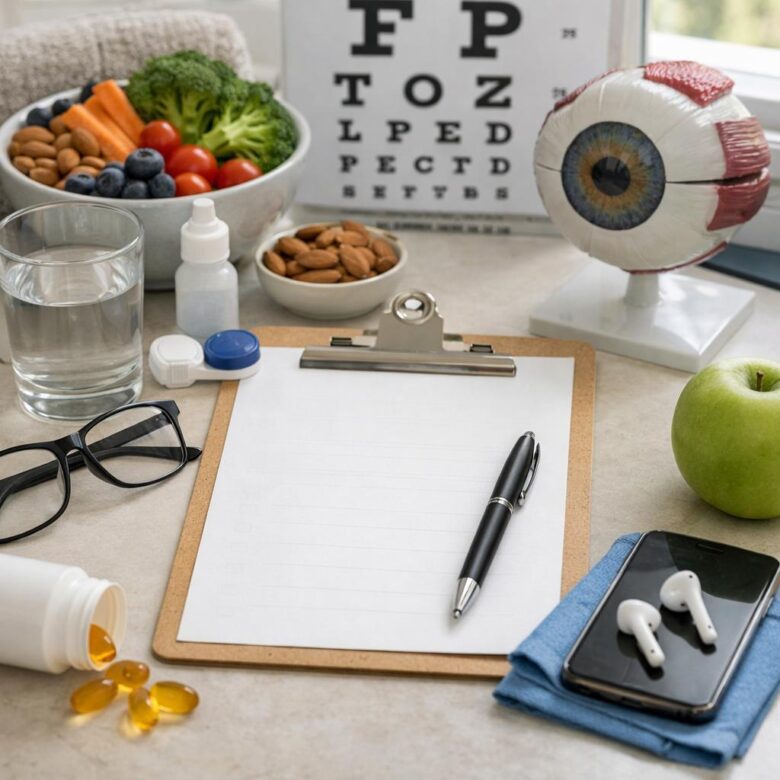
A strong daily eye care routine starts with what you eat. Add foods rich in lutein, zeaxanthin, omega-3 fatty acids, vitamin C, and zinc, such as spinach, eggs, salmon, citrus, and nuts; these nutrients are commonly recommended in preventive eye health plans and may support long-term retinal health.
If you work on a laptop all day, schedule screen breaks before your eyes feel strained. A practical approach is to use the 20-20-20 rule: every 20 minutes, look at something 20 feet away for about 20 seconds, and consider using tools like Apple Screen Time or a browser reminder extension to stay consistent.
- Hydration: Keep water nearby, especially if you wear contact lenses or work in air-conditioned spaces that can worsen dry eye symptoms.
- Sleep: Aim for consistent rest, because poor sleep often shows up as eye twitching, irritation, and blurred focus the next day.
- Screen setup: Position your monitor slightly below eye level and reduce glare with an anti-reflective screen filter or prescription computer glasses.
In real office settings, I often see eye strain improve when people adjust lighting rather than simply buying stronger reading glasses. If dryness, headaches, or blurred vision continue, book a comprehensive eye exam with an optometrist and check whether your vision insurance covers prescription glasses, contact lens fittings, or dry eye treatment options.
Common Eye Health Mistakes That Can Strain or Weaken Your Vision
One of the biggest mistakes is waiting until vision feels “bad enough” before booking an eye exam. Many people update their phone every two years but keep the same prescription glasses for far longer, even when headaches, squinting, or night driving problems start showing up.
Another common issue is poor screen setup. If your laptop is too close, your brightness is too high, or you work for hours without looking away, digital eye strain can build quickly. Tools like f.lux or built-in Night Shift settings can reduce harsh blue-toned light in the evening, but they do not replace proper breaks or an accurate vision prescription.
- Skipping annual eye exams: Routine visits with an optometrist can catch prescription changes, dry eye, glaucoma risk, and other eye health concerns early.
- Using cheap or expired contact lenses: Poor lens hygiene can lead to irritation, infection, and higher eye care costs later.
- Ignoring UV protection: Sunglasses with UV400 protection are not just a fashion accessory; they help protect the eyes during driving, travel, and outdoor work.
Dry eye is another one I see people underestimate, especially in air-conditioned offices. A real-world example: someone may blame blurry afternoon vision on tiredness, when the real trigger is low blinking during spreadsheet work and not using lubricating eye drops recommended by an eye doctor.
Small upgrades can make a difference: adjust monitor height, replace old contact lens cases, compare prescription eyewear costs, and use protective safety glasses for DIY projects. The goal is prevention, not panic.
Final Thoughts on Eye Health Checklist: Daily Habits That Support Better Vision
Better vision is supported by small choices made consistently-not occasional effort. Use your daily habits as an early-warning system: if screen breaks, hydration, sleep, nutrition, and eye protection are becoming difficult to maintain, your eyes may already be under strain.
- Start simple: choose two habits you can follow every day.
- Act early: do not ignore dryness, headaches, blurred vision, or light sensitivity.
- Get guidance: schedule routine eye exams, especially if you use screens often or have risk factors.
Protecting your eyesight is easier when prevention becomes part of your normal routine.